An Encyclopedia and Go to Source for All Things UAP

UAP Personalities

Loedding, Alfred

TL;DR Claim(s) to Fame

  • Engineer associated with early calls for technical seriousness in UFO evaluation.
  • Represents the “insider-adjacent” tradition: treating sightings as aerospace-data problems.
  • Frequently referenced in histories of mid-century UFO research organizations and debates.
  • Criticized by skeptics as part of an era where limited data enabled speculative conclusions.

Introduction

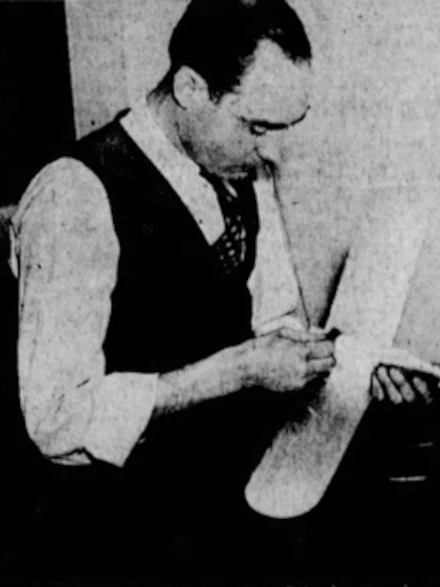
Alfred Loedding is remembered in UFO history as an engineer aligned with early, technically framed arguments that unidentified aerial reports warranted serious evaluation. In the mid-20th-century context—when aviation expanded rapidly and Cold War anxieties elevated airspace anomalies—figures like Loedding helped position UFOs as an engineering and intelligence problem rather than a purely sensational or mystical subject.

Background

Loedding’s significance comes from a technical identity and from proximity—direct or indirect—to environments where aviation reports were treated as data. This placed him within a tradition of “responsible ufology,” which aimed to apply disciplined evaluation methods to ambiguous sightings.

Ufology Career

Rather than being known for celebrity-style media appearances, Loedding’s importance is historiographical: he is cited in organizational histories and debates about how to treat UFO reports within engineering and defense contexts.

Early Work (Year-Year)

Early involvement emphasized interpreting UFO accounts with attention to flight characteristics, observational errors, and the gap between witness perception and physical reality—while still allowing that some reports might indicate unknown technology.

Prominence (Year-Year)

Loedding’s prominence in the record is tied to how later authors cite him: as a technical-minded figure who resisted dismissive ridicule and advocated structured evaluation.

Later Work (Year-Year

Later references to Loedding typically appear in retrospectives of early UFO research efforts, especially those highlighting engineering perspectives and organizational attempts at systematic study.

Major Contributions

  • Technical framing: Helped normalize UFO reports as potentially analyzable aerospace events.
  • Institutional bridge: Served as an example of how technical professionals engaged the subject without overt sensationalism.
  • Historical influence: Appears in the “genealogy” of serious-study arguments used in later UAP eras.

Notable Cases

Loedding is not chiefly associated with a single famous case; his contribution is the broader technical posture toward UFO reports and the push for evaluative seriousness.

Views and Hypotheses

His view is commonly summarized as: some reports are explainable through conventional causes, but a subset merits continued analysis because available explanations do not fully account for observed details.

Criticism and Controversies

Critics argue that early UFO eras were especially vulnerable to misinterpretation due to poor instrumentation, secrecy, and limited public access to aerospace context. Supporters argue that dismissiveness was itself unscientific given the frequency of credible witness reports.

Media and Influence

Loedding’s influence is primarily archival—through citations in books and historical discussions—rather than through modern documentary stardom.

Legacy

Loedding remains a minor but meaningful figure in the history of “serious study” ufology: an emblem of technical engagement during a formative era.

Loedding, Alfred

robert.francis.jr 1 Comment(s)
This is a topic for discussing Alfred Loedding to improve his Article and add any missing interviews, podcasts and documentaries in the Media section.
Quote