Introduction
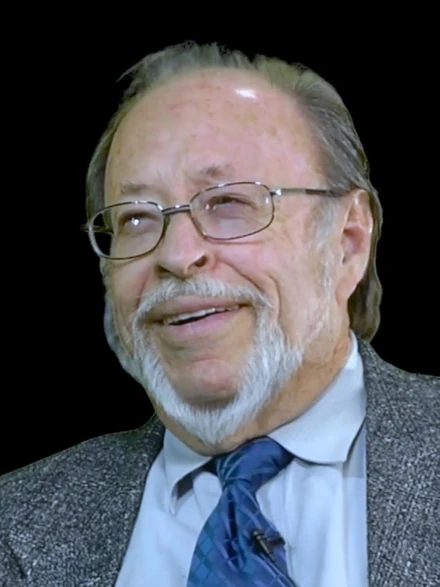
Roger Leir was an American physician and ufology figure best known for claims that he surgically removed anomalous “implants” from individuals who reported alien abduction experiences. Leir’s work became prominent because it appeared to move abduction ufology from testimony and hypnosis into the realm of physical artifacts. His publications and interviews argued that certain recovered objects displayed unusual properties. Critics countered that the procedures and analyses did not meet rigorous forensic and scientific standards and that mundane explanations were plausible.
Background
Leir’s professional identity as a physician was central to the credibility of his claims. In UFO culture, medical authority can strongly influence public perception, particularly when the subject involves bodily evidence. His work emerged amid a broader abduction-era interest in bodily marks, missing time narratives, and alleged medical procedures performed by non-human entities.
Ufology Career
Leir’s ufology career focused on collecting experiencer reports, identifying alleged implant sites, arranging removals, and publicizing analysis. He functioned as both investigator and advocate for the interpretation that some abductees possessed foreign objects inconsistent with normal medical findings.
Early Work (Year-Year)
In early phases, Leir’s efforts centered on building a case series—multiple individuals with similar claims—while seeking laboratory evaluation as a pathway to objective validation. Early publicity emphasized the potential for “hard evidence” in a domain often criticized for relying on narrative.
Prominence (Year-Year)
Leir became prominent through books, lectures, and documentary appearances that framed implant removal as a breakthrough. This era also intensified criticism: skeptics and some medically trained observers questioned documentation, sample handling, and whether the objects were consistent with common foreign bodies.
Later Work (Year-Year)
In later years, Leir remained a recurring figure whenever the UFO community discussed physical traces of abduction. His work continued to be cited both by supporters as evidence and by critics as an example of how weak controls can produce strong-sounding conclusions.
Major Contributions
- Implant narrative mainstreaming: Helped make “alien implants” a durable motif in abduction ufology.
- Artifact-focused approach: Pushed the field toward claims of tangible evidence rather than purely testimonial accounts.
- Media amplification: Popularized implant claims through lectures and documentary ecosystems.
Notable Cases
Leir’s “notable cases” are the implant-removal case series rather than a single incident. Individual subjects are often discussed in the literature as exemplars, but the broader claim rests on the accumulation of similar narratives paired with recovered objects.
Views and Hypotheses
Leir’s framing suggested that some implants were monitoring devices or evidence of non-human medical intervention, and that anomalous material properties indicated advanced technology. Critics emphasized that without strict forensic procedures, extraordinary interpretations are premature.
Criticism and Controversies
The main controversies concern methodology: patient selection, documentation standards, blinding, contamination control, and chain-of-custody for samples. Skeptical interpretations emphasize that foreign bodies can be common and that laboratory claims can be overstated without rigorous comparative baselines.
Media and Influence
Leir became a staple figure in abduction documentaries and UFO conference culture. His work continues to be referenced in discussions about whether physical evidence exists for abduction claims.
Legacy
Roger Leir’s legacy is inseparable from controversy: he remains one of the best-known proponents of “implant evidence,” symbolizing both the desire for hard proof in abduction ufology and the evidentiary pitfalls of pursuing extraordinary conclusions with insufficient controls.