Introduction
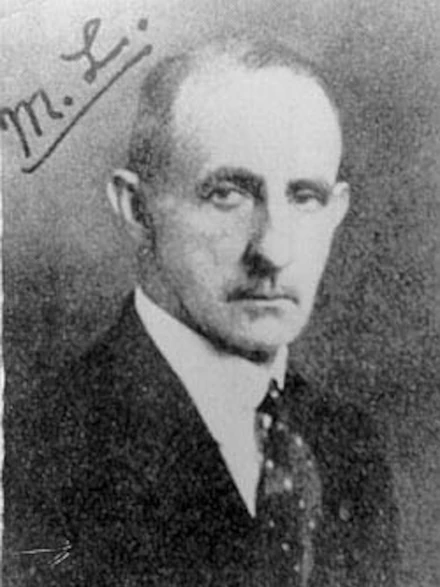
Meade Layne was an early American ufological theorist best known for promoting interpretations of UFOs as “etheric,” interdimensional, or ultraterrestrial phenomena. Rather than framing UFOs as craft arriving from other planets, Layne’s approach treated the phenomenon as originating from adjacent realities or subtle planes of existence. This perspective became one of the foundational pillars of “high strangeness” ufology, influencing later writers who argue that the phenomenon behaves more like an intelligence interacting with consciousness than like a conventional aerospace technology.
Background
Layne’s ideas developed in an intellectual environment where esoteric philosophies, psychical research, and alternative metaphysics were culturally active. Early UFO waves intersected with these currents, allowing interpretations that blended sightings with spiritual or occult frameworks.
Ufology Career
Layne’s ufology career is primarily theoretical and organizational, tied to the promotion of an interpretive framework rather than to the investigation of specific cases. His influence spread through writings and networks receptive to non-materialist interpretations of anomalous phenomena.
Early Work (1946-1951)
In the early UFO era, Layne’s work contributed to a diversification of explanatory models. He treated the phenomenon as incompatible with ordinary physics in a literal sense, emphasizing that its apparent behavior suggests a different ontological category than “spaceships.”
Prominence (1952-1960)
Layne’s prominence grew within esoteric and high-strangeness circles as UFO reports continued and as purely extraterrestrial explanations failed to satisfy all observers. His ideas provided a way to interpret contradictions—physical traces versus dreamlike encounters—within a single metaphysical scheme.
Later Work (1961-1981)
Later, Layne’s direct influence persisted mainly through citation by subsequent ultraterrestrial and interdimensional theorists. His ideas became part of ufology’s conceptual toolkit, repeatedly revived whenever the phenomenon’s “absurd” or paradoxical aspects are emphasized.
Major Contributions
- Ultraterrestrial framing: Strengthened non-ET models for UFO origin and behavior.
- High-strangeness foundations: Provided early vocabulary for interpreting dreamlike, tricksterish, or consciousness-linked aspects.
- Esoteric integration: Linked ufology with broader metaphysical and psychical research traditions.
Notable Cases
Layne is associated more with interpretive models than with single cases. His “cases” are the subset of UFO reports that appear to involve non-physical behavior, paradoxical effects, or encounters that resist straightforward material explanation.
Views and Hypotheses
Layne’s core hypothesis is that UFO intelligences may be adjacent to humanity in an ontological sense—co-existing in a different mode of reality rather than traveling conventionally across space. This model often treats consciousness, perception, and symbolic content as central features rather than side effects.
Criticism and Controversies
Criticism focuses on unfalsifiability: interdimensional claims can be difficult to test and can absorb contradictions by expanding metaphysical assumptions. Supporters argue that the phenomenon’s behavior demands models beyond conventional materialism and that strict physicalist criteria may be mismatched to the subject.
Media and Influence
Layne’s influence appears in later books and documentaries that emphasize “the phenomenon” as trickster-like or consciousness-linked, where he is cited as an early precursor to modern interdimensional interpretations.
Legacy
Meade Layne’s legacy is foundational within high-strangeness ufology: he helped establish that UFO interpretation is not only a question of where craft come from, but also a question of what the phenomenon is.