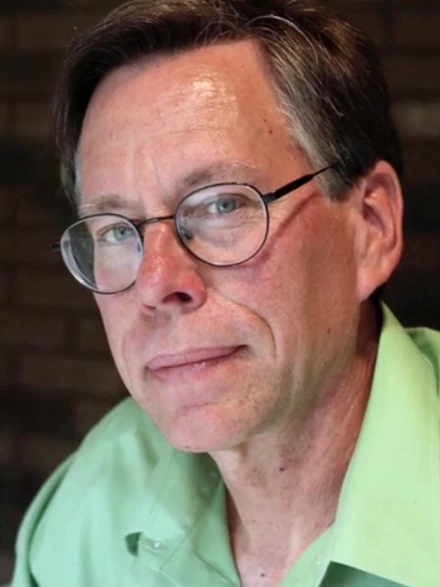
TL;DR Claim(s) to Fame
Bob Lazar is an American claimant whose story about working at a secret facility associated with Area 51 became one of the most influential narratives in modern ufology. Lazar alleges he was hired to help reverse-engineer extraterrestrial technology—specifically, disc-shaped craft stored at a site he described as “S-4.” He further claimed that the craft used a propulsion system involving a heavy element he identified as “Element 115.” Lazar’s account helped define a major branch of ufology: the belief that UFOs are real advanced craft and that governments and contractors possess recovered vehicles.
Lazar’s narrative hinges on technical identity and institutional access. His claimed educational and professional background has been a major point of dispute, with supporters arguing evidence was erased or obscured and critics arguing the record does not support his stated credentials. The credibility battle over Lazar is central to the case itself.
Lazar’s ufology role is that of a whistleblower-style storyteller rather than an investigator. His influence comes from media appearances, interviews, and repeated retellings that cemented his story into UFO canon. The Lazar narrative also contributed to the cultural linkage of Nevada secrecy, black budgets, and “reverse engineering” as the hidden core of the UFO mystery.
Lazar’s story broke into public discourse through media exposure and rapidly became a sensation. Early attention focused on his claims about the facility, the number and appearance of craft, and the alleged physics principles involved. The controversy began immediately: attempts to verify employment and education became part of the story’s ongoing structure.
As Area 51 lore grew, Lazar’s narrative became a foundational reference point—cited in books, documentaries, and conspiracy-adjacent discussions. The story’s durability owed to its compelling specificity: named sites, alleged briefings, and a quasi-technical propulsion claim that invited endless debate.
The modern disclosure era revived Lazar through renewed media attention and documentary-style reintroductions of the claim. His story remains central to contemporary debates about crash retrieval programs, whether “insider claims” can be trusted, and how myth and secrecy interact.
S-4 / Area 51 reverse engineering claim: The defining “case,” consisting of Lazar’s testimony, associated sightings-attempt narratives, and the long-running dispute over verifiability.
Lazar’s account implies that UFOs are physical craft of non-human origin and that their propulsion involves manipulation of gravity or spacetime through advanced materials and energy sources. The claim is structured to suggest partial knowledge: enough detail to sound technical, but not enough to be replicated externally.
The Lazar controversy is extensive: credential disputes, employment verification disputes, questions about narrative consistency, and debates over whether any corroborative evidence exists. To supporters, the absence of documentation is explained by secrecy and erasure; to critics, it is evidence that the claims are not substantiated.
Lazar’s influence is enormous in UFO media: his story is among the most-cited in documentaries and podcasts and is a staple reference in “crash retrieval” discourse.
Bob Lazar remains one of ufology’s most influential and divisive figures—a cornerstone of modern secret-program mythology and a persistent test case for how audiences judge credibility under conditions of alleged secrecy.
Dreamland (2019)
https://www.amazon.com/Dreamland-Autobiography-Lazar-Bob-ebook/dp/B07YN81TRQ/
Bob Lazar: Area 51 & Flying Saucers (2018)
https://www.youtube.com/watch?v=sZaE5rIavVA