Introduction
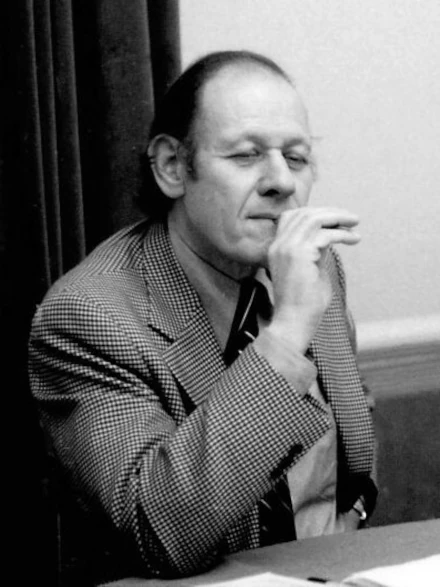
Paul Kurtz was an American philosopher and a foundational architect of modern organized skepticism. His relevance to ufology lies in institution-building: he helped create skeptical organizations, publications, and public outreach efforts that framed UFO and paranormal claims as domains requiring stringent evidentiary scrutiny. Kurtz’s work shaped how mainstream skeptical culture engages ufology—often treating it as a case study in pseudoscience, cognitive bias, and the social dynamics of belief.
Background
Kurtz’s background in philosophy and secular humanism informed a worldview that emphasizes rational inquiry, critical thinking, and the rejection of supernatural or extraordinary claims without strong evidence. In the cultural environment where UFOs often overlap with paranormal and spiritual interpretations, Kurtz’s approach positioned ufology as a target for skepticism and public education.
Ufology Career
Kurtz was not a UFO investigator; his “ufology career” is oppositional and institutional. He influenced ufology indirectly by shaping the skeptical counter-movement, promoting critical inquiry standards, and supporting skeptical critiques of UFO claims through organized platforms and publications.
Early Work (Year-Year)
In early efforts, Kurtz contributed to the emerging skeptical movement’s consolidation, emphasizing that extraordinary claims thrive when institutions fail to teach critical reasoning. UFO belief, in this framing, becomes a predictable outcome of misinformation, cognitive bias, and cultural myth-making.
Prominence (Year-Year)
Prominence followed from institutional success: as skeptic organizations grew, their critique of UFO and paranormal claims gained media traction. Kurtz became a public face of skepticism, influencing how journalists and academics framed ufology and what kinds of evidence were treated as acceptable.
Later Work (Year-Year)
Later influence persisted through the skeptic infrastructure he helped build. Even as UAP discourse shifted into national-security contexts, the skeptical movement’s default posture—unidentified does not imply extraordinary—remained consistent with Kurtz’s epistemic philosophy.
Major Contributions
- Institution-building: Helped create enduring skeptical organizations and publications shaping discourse on UFO claims.
- Public education framing: Positioned ufology as a critical-thinking and evidence-evaluation problem.
- Norm-setting: Influenced journalistic and academic norms regarding how UFO topics are treated.
Notable Cases
Kurtz’s engagement is not case-specific. His “cases” are the broader patterns of how UFO stories spread and persist, and how public institutions respond. He treated ufology primarily as a belief phenomenon rather than an aerospace mystery.
Views and Hypotheses
He generally argued that UFO belief is fueled by psychological biases, media incentives, and insufficient critical training. He emphasized methodological skepticism: claims should be proportional to evidence, and extraordinary interpretations should not be adopted without extraordinary proof.
Criticism and Controversies
Ufologists criticize organized skepticism for dismissiveness and for conflating unknowns with errors. Some critics argue that skepticism can become identity-based, treating debunking as a social performance. Defenders argue that strong skepticism is necessary to counter misinformation and to protect scientific standards.
Media and Influence
Kurtz’s movement influence shaped decades of media framing around UFOs and paranormal claims, creating a readily accessible skeptical narrative for journalists. His legacy persists in skeptical organizations that continue to critique UAP claims.
Legacy
Paul Kurtz’s legacy in ufology is indirect but profound: he helped institutionalize skepticism as a counterforce to UFO belief, shaping public norms about evidence, credibility, and how extraordinary claims should be evaluated.