Introduction
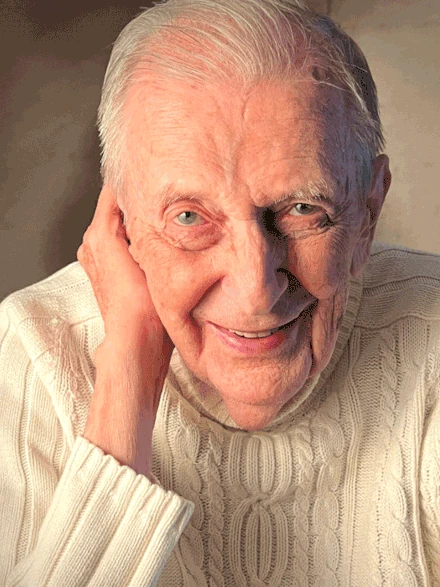
Stanley Krippner was an American psychologist known for research into dreams, consciousness, and anomalous experience. In ufology and the broader study of extraordinary claims, Krippner is often referenced as an academic figure who treated UFO-related experiences—especially abduction narratives and visionary encounters—as legitimate subjects for psychological inquiry. His relevance lies not in proving extraterrestrial craft, but in studying the experiential and cognitive dimensions that shape how such events are perceived, remembered, and integrated into personal identity.
Background
Krippner’s career developed in psychology and consciousness studies, including work that intersected with parapsychology-adjacent topics. This background positioned him to address ufology’s central interpretive problem: even when external evidence is limited, the experiences can be psychologically intense, transformative, and culturally contagious.
Ufology Career
Krippner’s ufology role was primarily interpretive and methodological. He engaged with experiencer testimony, addressed debates about hypnosis and memory, and contributed to frameworks that treat UFO encounters as events that may involve altered states, symbolic content, and complex interactions between perception and culture.
Early Work (Year-Year)
In early involvement, Krippner’s interest in dreams and altered states provided a natural bridge into anomalous experience research. UFO-related narratives often include dreamlike qualities, liminal states, and memory gaps—domains where his expertise was relevant.
Prominence (Year-Year)
Krippner became prominent in anomalous-experience circles as an academic willing to discuss taboo subjects without ridicule. He served as a legitimizing presence for communities seeking scholarly engagement with experiences that conventional institutions often dismiss.
Later Work (Year-Year)
In later work, Krippner remained influential through interviews, collaborations, and the continued citation of his ideas in experiencer studies. As UAP discourse shifted toward policy and sensors, his work remained relevant for the parallel stream concerned with consciousness, trauma, and meaning-making.
Major Contributions
- Experiencer legitimacy: Treated UFO/abduction experiences as meaningful psychological phenomena worth studying.
- Methodological caution: Engaged debates about hypnosis, memory reliability, and narrative contamination.
- Consciousness framing: Helped integrate altered-state and dream research perspectives into ufology.
Notable Cases
Krippner is associated with experiencer research broadly rather than with a single case. His “cases” are patterns: recurring experiential structures across narratives, the psychological aftereffects of encounters, and the cultural motifs that shape interpretation.
Views and Hypotheses
He often emphasized that the meaning and impact of an experience can be real regardless of its external ontology. His approach leaves open multiple possibilities—external stimulus, internal psychology, cultural scripting—while focusing on how consciousness and context shape the event’s phenomenology.
Criticism and Controversies
Hard skeptics criticize parapsychology-adjacent engagement as methodologically weak. Some ufologists criticize psychological framing as “explaining away” physical craft. Supporters argue that ufology requires psychological expertise precisely because witness testimony and subjective experience are central to the phenomenon’s public footprint.
Media and Influence
Krippner influenced experiencer-focused podcasts, conferences, and academic-adjacent discussions. He helped provide a vocabulary for discussing extraordinary experiences without immediately reducing them to pathology or deception.
Legacy
Krippner’s legacy in ufology is as a bridge between academic psychology and anomalous experience communities, reinforcing that the UFO problem includes the study of consciousness, memory, and meaning—not only the study of aerial objects.