Introduction
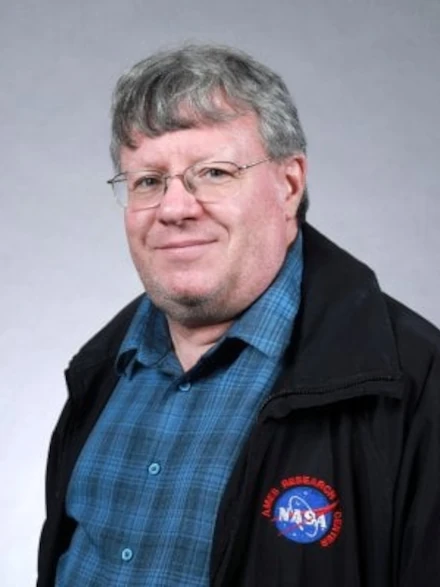
Kevin Knuth is a physicist who became prominent in modern ufology through advocacy for rigorous scientific study of UAP and through authorship of widely circulated research-style summaries framing UAP as a legitimate interdisciplinary problem. He is associated with The Sol Foundation as an advisory-board member, aligning with contemporary efforts to institutionalize UAP research norms.
Background
Knuth’s authority in ufology discourse is rooted in physics training and academic presentation style. This background informs his recurring emphasis on measurement, signal-to-noise problems, sensor calibration, and the limits of anecdotal or purely testimonial evidence.
Ufology Career
Knuth’s ufology career is defined by public lectures, interviews, and research-adjacent writing that argues UAP can be studied systematically. He is often situated within the “scientific UAP” movement that seeks to build methods and institutions rather than to focus solely on disclosure narratives.
Early Work (Year–Year)
Early UAP-facing work is characterized by public-facing analysis and argumentation: reframing classic cases in terms of kinematics, sensor constraints, and hypotheses about advanced technology or rare physical phenomena.
Prominence (Year–Year)
Prominence grew as the UAP topic gained mainstream attention and a new ecosystem of papers, research groups, and conferences emerged. Knuth’s ability to present UAP questions in a physics-informed register made him attractive to audiences seeking a “serious” vocabulary.
Later Work (Year–Year)
Later work includes continued advocacy for improved data collection and participation in institutions like Sol that focus on governance and legitimacy. His output increasingly emphasizes research design, interdisciplinary collaboration, and clarifying what can and cannot be inferred from available evidence.
Major Contributions
- Advanced a physics-informed public framework for analyzing UAP reports and sensor data.
- Helped popularize the idea of UAP as a legitimate research topic requiring formal methods and institutions.
- Contributed to synthesis-style writing that maps historical studies and proposes research directions.
Notable Cases
Knuth is more closely linked to category-level analysis (e.g., “high-performance” reports) than to a single signature case. His relevance comes from interpretive frameworks applied across many cases rather than from being a principal investigator on one celebrated incident.
Views and Hypotheses
Knuth’s public stance tends to be method-first: separate the unknown from the unknowable by improving data collection. He is also known for entertaining the possibility that some UAP reports could reflect advanced technology, including nonconventional aerospace capabilities, while stressing that evidence must decide.
Criticism and Controversies
Critics argue that the “scientific UAP” posture can drift into motivated reasoning if extraordinary hypotheses are treated as too plausible without commensurate evidence. Supporters argue that refusing to consider such hypotheses is itself unscientific if the data remain unresolved.
Media and Influence
Knuth appears frequently in interviews and conferences that position UAP study as an emerging research domain. His influence is strongest among audiences seeking technical framing rather than purely cultural or conspiratorial storytelling.
Legacy
Knuth’s legacy will likely depend on whether UAP research groups and institutions mature into reproducible results, improved sensor datasets, and durable norms that separate serious inquiry from spectacle.