Introduction
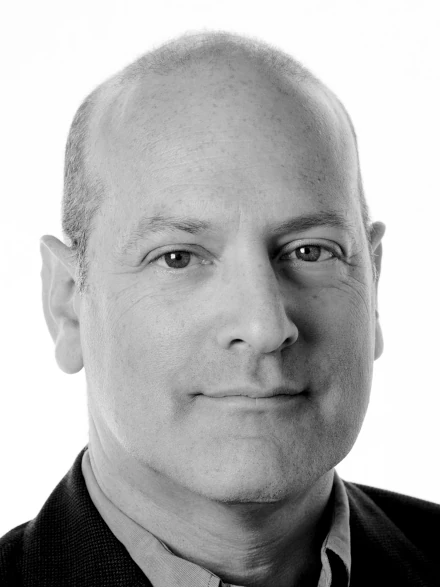
Keith Kloor is a science journalist whose relevance to ufology arises from his critical coverage of modern UAP narratives, especially those tied to “disclosure” media cycles. Kloor has focused on how claims gain legitimacy through institutional cues, how stories are amplified through journalism and social media, and how evidentiary standards can erode when sensational narratives outpace verifiable documentation. His work represents a contemporary skeptical approach centered not only on individual cases but also on the information ecosystem that produces UFO belief.
Background
Kloor’s background in science journalism predisposes him toward careful sourcing, skepticism about extraordinary claims, and attention to how institutions signal credibility. In the UAP era—where official acknowledgments of “unidentified” events coexist with ambiguous data—his approach emphasizes distinguishing unknowns from evidence of exotic technology or non-human intelligence.
Ufology Career
Kloor is not a UFO investigator; he is a media and narrative critic. His “ufology career” consists of writing articles, essays, and commentary that challenge or contextualize claims made by UAP advocates, journalists, and officials. He often treats ufology as a case study in how science-adjacent controversies develop.
Early Work (Year-Year)
In early phases of his UAP-adjacent commentary, Kloor engaged the broader question of how taboo topics can shift into mainstream conversation. He emphasized that mainstreaming does not guarantee truth, and that the process of mainstreaming itself warrants scrutiny.
Prominence (Year-Year)
Kloor’s prominence in ufology-adjacent debate increased as UAP became a mainstream policy and media topic. His critiques were cited by skeptical communities as counterweights to hype and were debated by ufologists who felt his emphasis on debunking neglected the reality of unresolved cases.
Later Work (Year-Year)
In later work, his role remained that of a skeptical commentator and fact-checker, often addressing new claims, contested whistleblower narratives, and the evolving institutional landscape of UAP research and oversight.
Major Contributions
- Media-ecosystem critique: Highlighted how incentives and credibility signals shape UAP narratives.
- Evidentiary standards advocacy: Reinforced norms of documentation and careful inference.
- Counter-hype presence: Functioned as a prominent skeptical voice within disclosure-era conversation.
Notable Cases
Kloor’s work is less about resolving single cases than about scrutinizing high-profile narratives and the evidence claims attached to them. His “cases” are often the media controversies themselves—how certain stories are told, sourced, and interpreted.
Views and Hypotheses
He tends to emphasize that “unidentified” does not equal “alien,” and that ambiguity can persist due to limited data, observational constraints, and institutional communication issues. His approach often treats UAP belief dynamics as sociological phenomena shaped by narrative reinforcement and authority cues.
Criticism and Controversies
Critics argue that skeptical journalism can undervalue witness sincerity and can conflate “not proven” with “false.” Supporters argue that careful skepticism is essential precisely because UAP stories can become politicized and monetized, producing incentives for exaggeration.
Media and Influence
Kloor’s influence lies in shaping skeptical framing within mainstream-adjacent discourse: providing skeptical readers with structured critiques and offering journalists cautionary examples about sourcing and inference.
Legacy
He represents an important strand of modern UAP discourse: the argument that the information ecosystem matters as much as the sightings, and that disciplined skepticism is necessary to prevent ambiguity from being converted into certainty without proof.