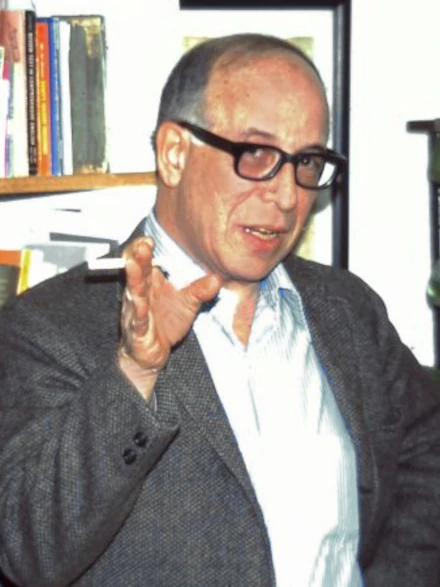
TL;DR Claim(s) to Fame
Philip J. Klass was an American journalist and prominent UFO skeptic whose work profoundly influenced how UFO claims are contested in public discourse. He argued that most UFO reports could be explained by misidentification, hoax, rumor, or misunderstanding, and he challenged both the evidentiary standards and the investigative competence of many ufologists. Klass remains a central antagonistic figure in ufology’s intellectual history: widely cited by skeptics as a rigorous critic and widely condemned by believers as excessively adversarial and biased.
Klass developed his public authority through journalism and technical commentary, bringing a strong preference for conventional explanations and evidentiary discipline into a domain he viewed as prone to error and wishful thinking. He approached ufology as a public-education problem: prevent extraordinary claims from gaining traction without extraordinary evidence.
Klass’s ufology career was primarily oppositional and analytical. He reviewed reports, challenged case narratives, disputed interpretations, and publicly criticized major UFO organizations and personalities. His work helped institutionalize “debunking” as a sustained counter-current within UFO discourse, often aiming to resolve cases through prosaic explanations.
In early involvement, Klass established himself as a skeptical critic of UFO claims, developing a style that combined technical argument, rhetorical confrontation, and direct engagement with prominent cases. He emphasized how observational error, memory distortions, and media amplification can produce convincing but mistaken UFO narratives.
Klass’s prominence peaked as he published widely read critical books and became a frequent media participant. During this era, the UFO debate increasingly polarized into camps, and Klass became a central representative of the hard-skeptical position: that UFO claims do not justify extraordinary conclusions and often collapse under scrutiny.
In later years, Klass continued to challenge new developments in ufology and remained a reference point for skeptical critique. His legacy persisted beyond his lifetime through citations in skeptical literature and through the continued use of his arguments in case disputes.
Klass engaged many famous cases, often positioning himself against leading ufologists’ interpretations. His “notable cases” are those where his skeptical alternative explanation became a lasting part of the case’s public controversy.
Klass argued that UFO evidence fails to meet the threshold for extraordinary conclusions and that social and psychological factors drive belief persistence. He treated secrecy claims with skepticism and emphasized that institutions sometimes remain silent not to hide aliens, but to avoid embarrassment about error, confusion, or miscommunication.
Critics accuse Klass of ideological bias and of using tactics they view as unfairly aggressive toward witnesses and researchers. Supporters argue that strong critique is justified given the prevalence of error and the social costs of misinformation. Klass’s controversies are inseparable from his role: he is remembered as both a formidable critic and a polarizing presence.
Klass’s media influence was substantial; he helped define the skeptical voice in UFO coverage for decades. His work continues to shape how skeptical communities discuss UAP, even in the modern era where institutional acknowledgment of “unidentified” events has revived public attention.
Philip J. Klass remains one of ufology’s most consequential skeptics—an enduring reference point in arguments about evidentiary standards, investigative competence, and the boundary between mystery and misinterpretation.
UFOs Explained
https://www.amazon.com/s?k=UFOs+Explained+Philip+J.+Klass
UFO Abductions: A Dangerous Game
https://www.amazon.com/s?k=UFO+Abductions+A+Dangerous+Game+Philip+J.+Klass