Introduction
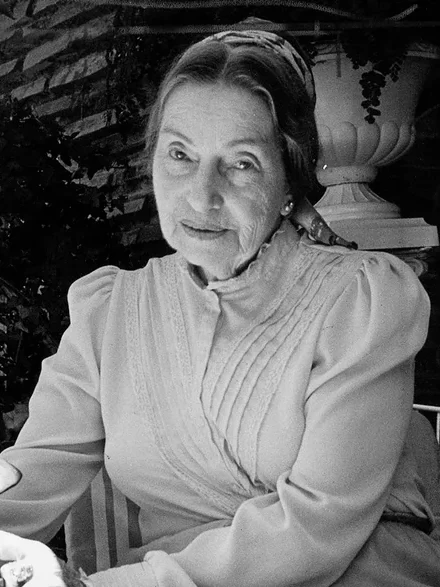
Elizabeth Klarer was a South African contactee whose claims of extraterrestrial contact became widely known within the postwar contactee movement. She asserted that she had repeated encounters with a human-like extraterrestrial associated with Alpha Centauri and that the relationship included both spiritual instruction and a romantic component. Klarer’s story occupies a distinctive niche in ufology: it is intensely personal, message-oriented, and structured as an experiential narrative rather than a case built on independently verifiable documentation.
Background
Klarer’s story emerged in an era when contactee narratives flourished internationally, shaped by Cold War anxieties, technological optimism, and New Age spiritual currents. In this environment, UFO encounters were often framed not as threats but as moral or spiritual interventions by advanced beings.
Ufology Career
Klarer’s ufology role is that of an experiencer and narrator. She was not a field investigator or organizational leader in the conventional research sense. Her influence derives from the dissemination of her account through books, interviews, and the wider contactee subculture that values personal testimony and revelatory narrative.
Early Work (Year-Year)
In early phases, Klarer’s claims took shape as a developing narrative of repeated contacts and communications. Early dissemination relied on the contactee-era network of lectures, publications, and interpersonal circulation, where personal accounts could gain traction through resonance rather than through corroboration.
Prominence (Year-Year)
Her prominence grew as her story was published and widely discussed within UFO communities. The romantic aspect of the narrative made it particularly memorable and controversial, distinguishing it from more militarized or threat-oriented UFO storylines.
Later Work (Year-Year)
In later years, Klarer’s influence continued primarily through the durability of contactee literature and the ongoing fascination with human-like extraterrestrial encounter stories. Her narrative remains frequently cited as a prominent example of contactee-era claims outside the North American hub.
Major Contributions
- Contactee narrative canon: Contributed one of the better-known romance-centered contactee stories in ufology.
- Globalization of contactee lore: Reinforced that contactee narratives emerged internationally, not only in the U.S.
- Spiritual framing: Helped maintain the “benevolent cosmic message” branch of UFO interpretation.
Notable Cases
Klarer’s “case” is essentially her personal narrative rather than a discrete independently investigated incident. Her account includes claimed meetings, communications, and a broader cosmological explanation, functioning as a self-contained contactee mythology.
Views and Hypotheses
Her framing typically emphasizes benevolent extraterrestrials, spiritual evolution, and cosmic ethics. UFOs are treated as purposeful interventions by advanced beings, and contact is framed as meaningful instruction rather than random encounter.
Criticism and Controversies
Klarer’s claims are controversial primarily because they are difficult to verify and because contactee narratives are historically associated with cultural scripting and myth-making. Skeptics interpret such accounts as psychological, social, or imaginative phenomena. Supporters interpret them as sincere testimony and part of a hidden but widespread contact reality.
Media and Influence
Klarer’s story has circulated widely in contactee-focused books, interviews, and UFO documentaries, where it often functions as a striking example of the “human-like ET romance” motif.
Legacy
Elizabeth Klarer remains a notable contactee figure whose narrative illustrates ufology’s experiential and spiritual branch—an enduring reminder that the UFO phenomenon’s cultural footprint includes intimate, message-based encounters as well as sightings and policy debates.