Introduction
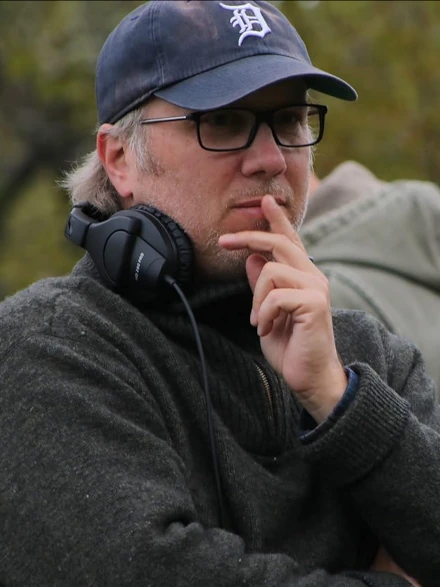
Paul Kimball is a Canadian filmmaker and television producer whose work in the UFO domain is primarily documentary and narrative-driven. Rather than functioning as a primary investigator of sightings or an advocate of a single explanatory theory, Kimball’s contributions center on documenting ufology as a social and investigative phenomenon—profiling key personalities, revisiting famous episodes, and presenting UFO history as a complex cultural story shaped by secrecy claims, witness testimony, and contested evidence.
Background
Kimball’s professional identity is rooted in documentary filmmaking. This background emphasizes narrative coherence, character-driven storytelling, and the translation of specialist debates into accessible formats for broad audiences. In UFO media, such skills are particularly influential because much of the public’s understanding of the subject is mediated through documentaries rather than primary literature.
Ufology Career
Kimball’s ufology career consists of producing, directing, and contributing to UFO documentaries and related programming. He is associated with a style of coverage that treats ufology as a field with internal disagreements and evolving claims rather than as a straightforward proof dossier. His work often highlights the tension between belief, skepticism, and the institutional dynamics of secrecy and stigma.
Early Work (Year-Year)
In early phases, Kimball developed the documentary voice that would later be applied to UFO subjects: a focus on interviews, archival footage, and the human dimensions of contested belief systems. His entry into UFO content occurred during a period when cable and specialty networks increasingly supported niche documentary programming.
Prominence (Year-Year)
Kimball’s prominence in ufology-adjacent culture grew through the visibility and circulation of his UFO-themed productions. As his work reached audiences beyond dedicated ufology communities, he helped define how non-specialists encounter the UFO subject: not only as sightings, but as an ongoing argument about evidence, institutions, and narrative.
Later Work (Year-Year)
In later work, Kimball’s influence persisted through continued documentary circulation and the broader expansion of UAP media. His approach remained aligned with documentary practice: presenting claims, personalities, and conflicts while allowing uncertainty to remain part of the story’s structure.
Major Contributions
- Documentary curation: Shaped public memory of ufology by selecting which figures and themes to foreground.
- Bridge to mainstream audiences: Helped translate insider debates into accessible narrative form.
- Human-centered ufology: Emphasized personalities, belief dynamics, and institutional context.
Notable Cases
Kimball is more closely associated with documentary coverage of cases and personalities than with primary investigation of any single incident. His “notable cases” are those repeatedly featured in his productions and interviews, which contribute to the reinforcement of a canonical UFO narrative for general audiences.
Views and Hypotheses
Kimball is generally characterized as narrative-forward rather than theory-dogmatic. His work tends to treat UFO claims as unresolved and multifaceted, emphasizing the difficulty of definitive conclusions given the mixture of testimony, rumor, institutional secrecy claims, and limited public access to data.
Criticism and Controversies
Documentary treatment of UFOs is often criticized either for sensationalism (from skeptics) or for insufficient advocacy (from some believers). Kimball’s work, like much documentary ufology, sits in this contested space where audience expectations differ sharply about whether the goal is inquiry, entertainment, or confirmation.
Media and Influence
Kimball’s influence is strongly media-based: his documentaries and interviews contribute to how UFO culture is perceived outside of specialist circles. In the modern UAP era, such media translation work remains central to the field’s public legitimacy and tone.
Legacy
Kimball’s legacy in ufology is as a documentary storyteller who helped shape the public-facing narrative of UFO history and personalities, reinforcing ufology as an enduring cultural and investigative story.