Introduction
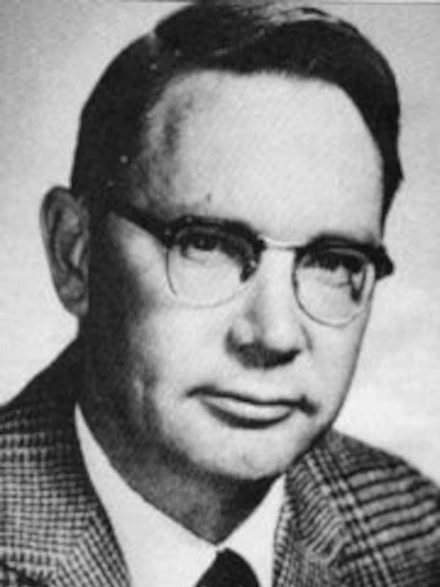
Morris K. Jessup was an American author best known for writing a foundational early work on UFOs and speculative propulsion, and for becoming a central character in one of ufology’s most persistent documentary mysteries: the so-called “Varo Edition,” an annotated copy of his book that was reproduced and circulated under unusual circumstances. Jessup’s story occupies a key position in the mythology of “suppressed UFO science,” in which unconventional ideas attract clandestine attention and are then obscured by secrecy and controversy.
Background
Jessup’s interests combined curiosity about astronomy and physics with mid-century fascination for emerging aerospace possibilities and the contactee-era environment. His writing emerged at a time when UFOs were being publicly debated and when technological optimism made radical propulsion speculation culturally plausible.
Ufology Career
Jessup’s ufology career was primarily literary rather than investigative. He attempted to synthesize reports and theoretical possibilities into an argument that UFOs might represent advanced technology and that conventional science had not fully engaged the problem. The subsequent annotated-copy episode elevated his status from author to legend.
Early Work (1955-1956)
Jessup’s early UFO work culminated in a book that combined case discussion with theoretical speculation. He treated UFOs as potentially physical craft and argued that propulsion might involve principles not yet mainstream within public aerospace science.
Prominence (1957-1960)
Jessup’s prominence in ufology grew with the emergence of the annotated-copy affair. The notion that his work attracted unusual attention—sometimes framed as military or intelligence interest—became a durable narrative that continues to be cited in discussions of hidden research programs.
Later Work (1961-1965)
In later years, Jessup remained central to UFO lore through the continuing circulation of the Varo/annotation story. His enduring presence in ufology owes as much to the mystery surrounding the annotated edition as to the content of his original arguments.
Major Contributions
- Speculative propulsion discourse: Helped establish early public frameworks for thinking about UFO technology.
- Varo Edition mythology: Became a core “document mystery” in ufological history.
- Suppressed-research template: Provided a narrative model later echoed in disclosure-era claims.
Notable Cases
The Varo Edition / annotated copy affair: An unusual, heavily discussed episode involving marginal notes and claims of naval interest that became a central documentary mystery in UFO literature.
Views and Hypotheses
Jessup leaned toward the view that UFOs could be physical craft and that unconventional physics might be relevant. His work reflects a mid-century blend of curiosity and speculation, where the boundary between plausible future aerospace engineering and fringe conjecture was culturally more permeable than it would later become.
Criticism and Controversies
Criticism focuses on speculative leaps and on the ambiguity of the annotation story’s provenance. Supporters argue that the persistence and institutional echoes of the episode suggest deeper realities, while skeptics view it as an accretion of rumor and misinterpretation.
Media and Influence
Jessup’s influence persists through repeated citation in books, podcasts, and documentaries about UFO secrecy, suppressed technology, and intelligence-community involvement. The annotated-copy story remains a reliable “mystery hook” for media narratives.
Legacy
Jessup’s legacy is twofold: as an early popular theorist of UFO technology and as a central character in one of ufology’s most enduring documentary mysteries, shaping how later audiences imagine the relationship between UFO research and hidden institutions.