Introduction
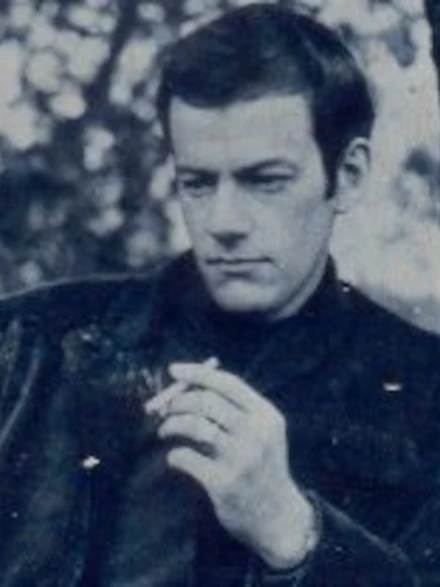
Peter Haining was a British writer and editor known for producing mass-market compilations of UFO cases and related mysteries. Within ufology, he occupies an important niche as a popularizer: he made the UFO canon accessible through curated casebooks, narrative-driven reference volumes, and anthology-style presentations that introduced many readers to major incidents.
Background
Haining’s professional identity was that of a prolific author and editor. His work reflects the logic of popular publishing: selecting engaging cases, summarizing complex histories, and presenting them in a format designed for broad readability rather than specialist debate.
Ufology Career
Haining’s ufology career is primarily bibliographic and editorial. He functioned as a curator of the UFO archive—collating cases, shaping a reader’s sense of which events matter, and sustaining public familiarity with recurring motifs such as landings, humanoid encounters, and military mysteries.
Early Work (Year-Year)
In early work, Haining established himself as an editor and compiler, developing the anthology approach that would define his UFO output: survey the literature, select compelling cases, and retell them with coherent narrative flow.
Prominence (Year-Year)
He became prominent through the reach of mass-market books that circulated widely in libraries and bookstores. This distribution made his case selections disproportionately influential in shaping “what the public thinks ufology is,” even when researchers debated the strength of particular inclusions.
Later Work (Year-Year)
Haining’s later influence continued through reprints and secondhand citation: many documentaries and online summaries trace back to the same anthology-style case canon he helped normalize.
Major Contributions
- Canon curation: Helped fix a popular list of “major UFO cases” through repeated anthology presentation.
- Accessibility: Made complex and scattered UFO literature readable for general audiences.
- Publishing bridge: Connected specialist ufology to mainstream curiosity via readable reference formats.
Notable Cases
Haining is associated with multi-case coverage rather than signature investigation. His “notable cases” are those he repeatedly included and emphasized, thereby reinforcing their perceived canonical status.
Views and Hypotheses
His writing typically maintains an open-ended tone that preserves mystery. Rather than arguing a single grand theory, he tends to present cases as puzzling, often juxtaposing conventional explanations with more extraordinary interpretations.
Criticism and Controversies
Critics argue that anthology publishing can perpetuate errors through repetition and may privilege sensational narratives. Supporters argue that compilation work is historically important: it preserves case memory and provides entry points for new audiences.
Media and Influence
Haining’s influence is largely through books and the derivative media that draw upon book summaries. His work helped shape the “casebook” genre that remains central to UFO publishing.
Legacy
He is remembered as a prolific UFO anthologist whose editorial choices helped define popular UFO canon and sustain public interest across decades.