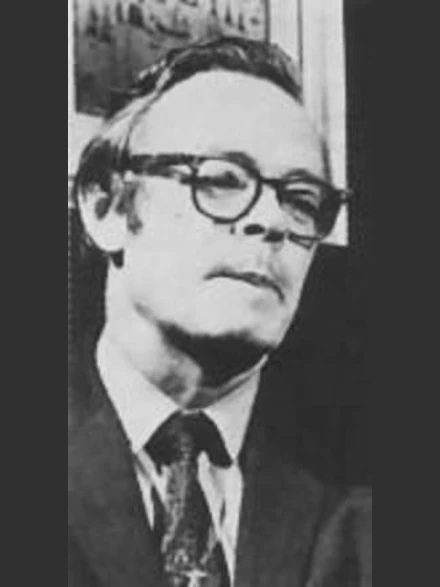
Introduction
James Harder was an engineer and civilian UFO investigator best known for leadership roles within organized mid-century ufology, particularly through APRO (Aerial Phenomena Research Organization). He is remembered as a serious-case proponent who emphasized structured interviews, systematic case documentation, and the importance of preserving witness detail in an era when official institutions were widely viewed as dismissive or inconsistent.
Background
Harder’s professional background in engineering reinforced a practical orientation: collect data, reduce ambiguity, and seek patterns rather than isolated anecdotes. In ufology, this translated into an emphasis on investigative procedure, internal quality control, and careful case writing.
Ufology Career
Harder’s career in ufology is defined by organizational and investigative labor: interviewing witnesses, coordinating case files, and helping set standards for how a private organization might handle reports at scale. He also served as an advocate for the credibility of “high-strangeness” testimony, including close encounters that seemed to exceed simple misidentification.
Early Work (Year-Year)
In early phases, Harder became involved during the growth of civilian UFO groups that attempted to fill the investigative gap left by inconsistent official attention. He contributed to the development of field practices, including the intake of witness narratives, diagramming, and basic corroboration attempts.
Prominence (Year-Year)
Harder’s prominence peaked during periods when APRO functioned as a major hub for international UFO reporting. As research leadership, he became associated with the organization’s posture: pro-witness, case-accumulative, and willing to engage extraordinary interpretations while still emphasizing documentation.
Later Work (Year-Year)
In later work, Harder’s influence persisted through the archival footprint of APRO-era research. His name remains part of the institutional genealogy connecting early organized civilian ufology to later abduction-focused and disclosure-era cultures.
Major Contributions
- Organizational casework: Helped build and maintain structured investigative pipelines within APRO.
- Witness-centered methodology: Emphasized interviewing, detail preservation, and narrative consistency checking.
- Legitimization by professionalism: Modeled a “serious investigator” stance during high stigma.
Notable Cases
Harder is typically associated with APRO case collections rather than one universally singular incident. His significance lies in how he handled reports: compiling, organizing, and advocating for attention to the strongest cases with the highest information content.
Views and Hypotheses
He tended to treat UFO reports as potentially evidential of real unknown phenomena, with an openness to extraordinary possibilities. At the same time, his engineering temperament supported a case-by-case approach: concentrate on well-documented incidents and avoid relying on purely sensational material.
Criticism and Controversies
Critics of APRO-era ufology argue that early civilian groups sometimes over-weighted testimony and under-weighted rigorous instrumented corroboration. Supporters counter that the period’s constraints—limited sensor access and public stigma—made disciplined testimony collection the only feasible research pathway.
Media and Influence
Harder’s influence is more institutional than celebrity-based. He is cited in histories of organized ufology as part of the generation that attempted to establish investigative seriousness and to maintain long-term case archives.
Legacy
Harder is remembered as an APRO-era organizer-investigator whose work helped keep civilian ufology structured, persistent, and methodologically self-conscious during a formative period.