Introduction
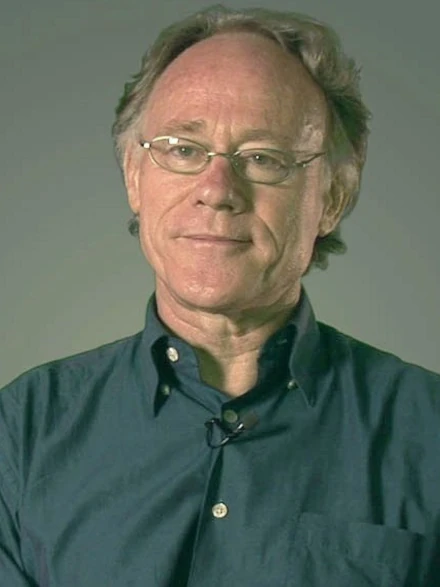
Graham Hancock is a British author best known for popularizing alternative history narratives involving lost civilizations, catastrophic resets, and the survival of advanced knowledge into later cultures. While not a conventional ufologist focused on aerial sightings or investigative casework, Hancock is frequently included in ufology-adjacent ecosystems because his themes—suppressed knowledge, anomalies, non-mainstream explanations—overlap with the cultural logic that often supports ancient-astronaut and UAP speculation.
Background
Hancock developed his career as a writer and journalist, building a public style that combines travel, comparative mythology, archaeological interpretation, and narrative synthesis. His books often treat mainstream academic consensus as incomplete or institutionally constrained, a posture that resonates strongly with UFO communities that likewise suspect official narratives of being partial.
Ufology Career
Hancock’s ufology relevance is primarily indirect: his work supplies conceptual scaffolding often used by UFO-adjacent theorists, including the idea that human history contains major hidden chapters and that taboo topics can be unfairly dismissed. He has also engaged publicly with debates about evidence, scientific gatekeeping, and the boundaries between speculation and scholarship.
Early Work (1988–1994)
In early work, Hancock established his public approach: bold synthesis, global comparative analysis, and critique of mainstream timelines. This era introduced his audience to the core premise that accepted narratives may omit transformative events and that alternative models deserve serious consideration.
Prominence (1995–2015)
Hancock became internationally prominent through best-selling books and extensive media appearances. During this period, his lost-civilization thesis became a fixture of popular alternative history. UFO and ancient-astronaut communities frequently referenced his work as compatible with the idea that outside influences—or extraordinary human capabilities—shaped early civilization.
Later Work (2016–present)
In later work, Hancock’s influence expanded through modern podcast ecosystems and streaming-era documentary-style series. His role increasingly resembles that of a public intellectual of “the anomalous,” providing a popular framework through which many audiences interpret both ancient mysteries and contemporary anomalies.
Major Contributions
- Popular alternative history synthesis: Created highly influential narratives about cataclysm and lost knowledge.
- Gatekeeping critique: Helped mainstream suspicion of institutional dismissal of unconventional ideas.
- Cross-domain influence: Supplied conceptual overlap used by UFO-adjacent and ancient-astronaut theorists.
Notable Cases
Hancock is not tied to a single UFO case. His “cases” are historical and archaeological arguments—sites, myths, and alleged anomalies—used to support the larger thesis of forgotten chapters in human history.
Views and Hypotheses
He argues that advanced ancient knowledge existed prior to known historical civilizations and that a catastrophic event reset human development, with fragments of knowledge preserved in myth and monument. UFO-adjacent interpretations sometimes extend this framework toward non-human influence, though Hancock’s core thesis is often presented as human-origin advanced culture rather than direct extraterrestrial intervention.
Criticism and Controversies
Academic critics argue that Hancock’s method can prioritize pattern-finding over falsifiable testing and that he sometimes overstates evidence or treats disputed interpretations as stronger than they are. Supporters argue he raises legitimate questions, highlights real mysteries, and challenges complacent narratives that can harden into dogma.
Media and Influence
Hancock’s influence is vast in podcasts, documentaries, and alternative research communities. He is frequently adjacent to UFO culture because his approach normalizes “forbidden questions” and encourages audiences to reinterpret anomalies as evidence of deeper hidden structure.
Legacy
Hancock’s legacy is that of a highly influential alternative history author whose framing of suppressed knowledge and ancient mystery strongly shaped the broader ecosystem in which ufology and UAP speculation often flourish.