Introduction
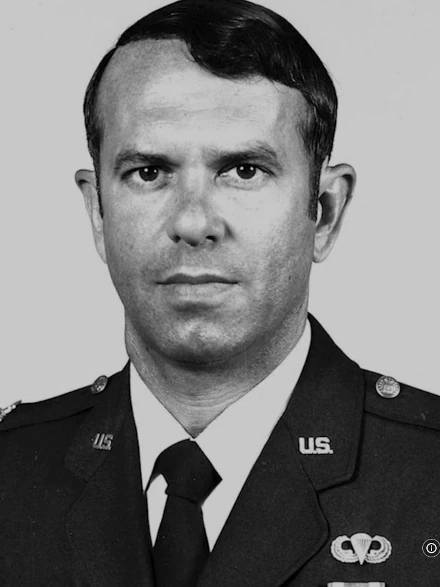
Charles I. Halt is a former U.S. Air Force officer best known for his role as a principal witness in the Rendlesham Forest incident, a late-1980 military-associated UFO case near RAF Woodbridge/RAF Bentwaters in the United Kingdom. Halt’s memorandum summarizing reported events became one of the most frequently reproduced documents in modern UFO literature and remains central to competing interpretations of the incident.
Background
Halt served in a command capacity at a U.S. Air Force installation during the Cold War. His relevance to ufology stems from the combination of his position, his proximity to reported events, and his creation of an official-toned written record that resembled operational reporting rather than civilian testimony.
Ufology Career
Halt’s ufology “career” is primarily that of a key witness and public commentator. Over time he participated in interviews, documentaries, and public events discussing Rendlesham, often navigating tension between early documentation, later elaborations, and the shifting recollections of multiple participants.
Early Work (1970–1980)
Prior to Rendlesham, Halt’s public life was typical of a career officer, with no major ufological role. This pre-incident context is frequently cited by those who argue that the case’s military setting and disciplined participants merit special attention.
Prominence (1980–1999)
Halt’s prominence followed the Rendlesham incident’s emergence into public attention. The memo and subsequent interviews made him one of the case’s most recognizable figures. During this era, competing narratives grew: some emphasized extraordinary implications; others emphasized misperception, procedural confusion, and later narrative amplification.
Later Work (2000–present)
In later decades, Halt remained a reference figure as the incident was repeatedly revisited. He became part of the meta-history of Rendlesham: how documents are interpreted, how memories evolve, and how media retellings can harden uncertain elements into perceived certainties.
Major Contributions
- Core documentation: The “Halt Memo” provided a structured written anchor for later reconstructions.
- Witness visibility: Sustained public attention via interviews that kept the case in circulation.
- Case historiography: Became integral to debates about evidence quality, drift, and interpretation.
Notable Cases
Rendlesham Forest incident: Halt’s association with this case is definitive. The incident’s notoriety derives from its military context, multiple witnesses, and the presence of documentary artifacts, all of which remain debated in terms of what they do—and do not—establish.
Views and Hypotheses
Halt has generally treated the event as an unusual occurrence that warranted serious attention. Interpretations around the case range from extraordinary craft hypotheses to more conventional explanations involving lights, stars, lighthouse beams, and human factors under nighttime conditions.
Criticism and Controversies
Controversies focus on inconsistencies across accounts, the role of later interviews and documentaries in shaping memories, and whether the memo’s language has been over-interpreted. Skeptics emphasize the dangers of narrative accretion; proponents emphasize the military context and the persistence of unresolved details.
Media and Influence
Rendlesham became a staple of UFO television and books, and Halt’s status as a named officer associated with a written memo made him especially influential. The case’s ongoing popularity ensures continued attention to his statements and documents.
Legacy
Halt’s legacy is inseparable from Rendlesham: he is remembered as the memo-writing witness whose documentation helped elevate the incident into one of the world’s most widely discussed modern military UFO cases.