Introduction
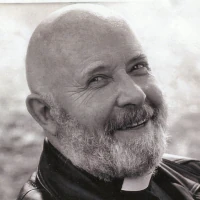
Lionel Fanthorpe is a British Fortean writer and media figure associated with UFOs, paranormal investigation, and “mysteries” publishing. On UAPedia he is best treated as a cultural force-multiplier: someone who expanded audience interest and maintained a pipeline of strange-case storytelling across decades.
Background
Fanthorpe’s identity is multi-lane: author, lecturer, and TV personality, often referenced in the UK anomalistics scene. His career matters because it shows how UFO culture is sustained less by one perfect case and more by continuous narrative production and community activity.
Ufology career
Rather than being known for one definitive investigation, Fanthorpe’s ufology impact comes from leadership, public-facing explanation, and case curation. He helped keep UFO discussion connected to broader “Fortean” themes—cryptids, hauntings, odd history—which both broadened the audience and blurred category boundaries.
Early work (Year–Year)
Early work is best summarized as his entry into popular writing and the anomalistics lecture circuit. He developed a recognizable style: rapid case summaries, curiosity-forward framing, and an emphasis on “there’s more out there” rather than narrow evidential argument.
Prominence (Year–Year)
His prominence peaked through media visibility—especially Fortean-style television—and through his reputation as a prolific producer of mystery-themed books. In this era he became a household-ish name in UK “strange things” entertainment, which indirectly boosted UFO visibility.
Later work (Year–Year)
Later work continued the same pattern: public appearances, writing, and participation in anomalies communities. Even when specific claims were disputed, his role as a broadcaster of the “mysteries canon” remained influential.
Major contributions
He contributed reach and continuity: keeping UFO and anomaly topics in public conversation through accessible formats. He also functioned as a curator—collecting, retelling, and packaging cases in ways that made them portable to mainstream readers.
Notable cases
Fanthorpe is associated with many retellings rather than a single signature case. A strong UAPedia approach is to list the best-known cases he popularized (with links), but keep the biography focused on his role as curator/communicator.
Views and hypotheses
His framing is broadly Fortean: anomalies deserve curiosity; categories are porous; dismissals are often premature. He tends to emphasize the volume and variety of strange reports as its own kind of argument for “something.”
Criticism and controversies (if notable)
Because he worked in mass-market mysteries publishing, critics sometimes argue the material can be entertainment-first. A balanced UAPedia entry notes the difference between “popularizer” and “evidence builder,” without treating that as inherently negative.
Media and influence
Fanthorpe’s influence is strongest in media: television, lectures, and endless re-circulation of cases in print. He is a good example of “soft power ufology”—shaping what the public thinks the UFO topic is.
Selected works
Given the scale of his bibliography, UAPedia should highlight UFO/anomalies-relevant titles and then link out to a full bibliography page rather than trying to enumerate everything inline.
Legacy
Fanthorpe’s legacy is cultural durability: he helped keep UFO/anomalies in circulation during periods when the topic was more socially ridiculed. Even readers who disagree with his conclusions often encountered the topic first through the kind of media pipeline he represented.