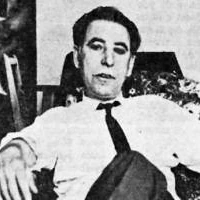
Introduction
Aladino Félix—better known in UFO literature by the pen name Dino Kraspedon—is a Brazilian contactee figure associated with claims of extraterrestrial contact and the publication of a prominent Brazilian flying-saucer narrative. He is notable on UAPedia because his story shows how “contact” claims can merge with ideology, charisma, and movement-building.
Background
Félix’s public identity is complex: he is discussed both as a saucer-contact claimant and as a political extremist figure in Brazilian history. That mix makes him different from the “club investigator” archetype; he belongs more to the contactee/cult-adjacent genre.
Ufology career
His influence is primarily literary and mythic: the reach of his contact story is what keeps him in UFO history. Rather than solving cases, he provided a narrative template—messages, warnings, cosmic framing—that later contactee material frequently echoes.
Early work (Year–Year)
This phase centers on the formation of the contact claim and the publication path under his pen name. For UAPedia, the important distinction is what he claimed to have experienced versus what later retellings amplified.
Prominence (Year–Year)
Félix’s prominence tends to spike when Brazilian UFO history is discussed internationally, because he represents a distinct national contactee strand. He is also used as an example of how extraordinary claims can be embedded in broader social agendas.
Later work (Year–Year)
Later discussions often focus less on new “evidence” and more on interpretation: why the story endured, and how the surrounding movement behaved. His legacy became as much sociological as it is “UFO-logical.”
Major contributions
He contributed a durable contactee text to Brazilian UFO culture and a case study in how belief systems form around claimed contact. He also illustrates how the “message” aspect of contact narratives can become more influential than verifiable details.
Notable cases
His “case” is essentially the contact narrative itself and its publication history. In UAPedia format, treat it as a “primary narrative case” rather than an investigation case.
Views and hypotheses
He framed the UFO phenomenon through revelatory messaging—cosmic instruction, warnings, and moral framing—typical of mid-century contactee literature.
Criticism and controversies (if notable)
He is controversial both because contact claims are inherently difficult to validate and because of the political/paramilitary dimensions associated with his life. A careful entry avoids glamorizing and focuses on what can be attributed and how the story propagated.
Media and influence
His influence persists mostly through reprints, summaries, and references in Brazilian UFO discussions. He is frequently cited as an example of how contactee stories can inspire communities—sometimes in unhealthy directions.
Selected works
“My Contact with Flying Saucers” (as Dino Kraspedon) is the key anchor title, with later editions/translations and related commentary.
Legacy
Félix remains a vivid example of the contactee era’s power—and its risks: charismatic certainty can spread faster than evidence. For UAPedia, he belongs in a category that explicitly labels “contactee / claimed-contact narrative” rather than “field investigator.”