Introduction
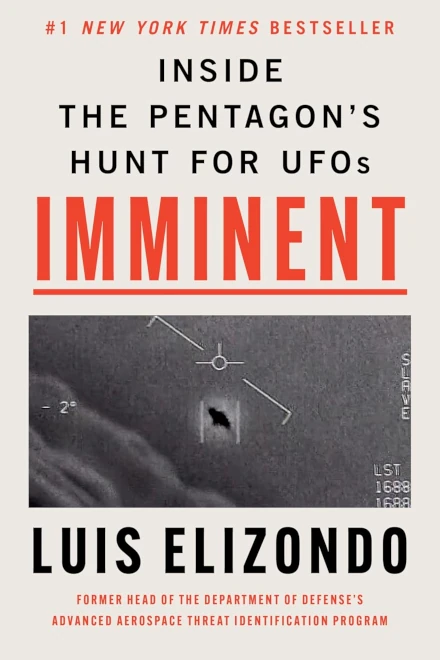
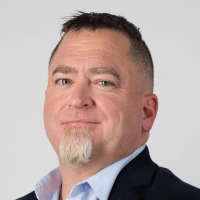
Luis “Lue” Elizondo is an American former military intelligence officer and public UAP advocate who became one of the most recognizable personalities of the late-2010s “disclosure” era. In ufology, he is associated with claims of internal U.S. government interest in UAP, the reframing of UFOs as a national-security topic, and a media-driven strategy to sustain public attention and political pressure for transparency.
Background
Elizondo’s professional identity in public UAP culture is rooted in military and defense-intelligence associations. His supporters emphasize experience with sensitive programs and threat assessment; critics argue that institutional proximity is not itself evidence. Regardless of interpretation, his biography functions as a central credibility mechanism in modern UAP storytelling.
Ufology Career
Elizondo’s ufology career is defined by advocacy, narrative framing, and public communication. He emerged not as a conventional investigator but as a spokesperson claiming familiarity with official UAP-related activity and with the bureaucratic obstacles that prevent wider disclosure.
Early Work (2000s–2017)
Prior to becoming a public figure, Elizondo’s relevance to ufology is typically described through internal government roles and alleged involvement with UAP program structures. This period is presented as his “insider” phase—where he gained purported knowledge that later informed his claims about secrecy, risk, and institutional dysfunction.
Prominence (2017–2020)
Elizondo’s prominence surged when he became publicly connected to disclosure-era media coverage and then joined TTSA. In this period he appeared as a principal figure in documentary-style programming built around Navy UAP incidents, emphasizing airspace incursions, sensor corroboration, and the idea that UAP represent an unresolved defense-relevant mystery. He became a main character in a broader cultural shift: UAP moved from fringe entertainment toward political hearings, mainstream journalism, and public policy debate.
Later Work (2021–Present)
After the initial TTSA wave, Elizondo’s focus increasingly leaned toward policy advocacy, public speaking, and sustained engagement with journalists and podcasters. He continued to position UAP as a topic demanding oversight and transparency, while also becoming a central target of skeptical critique about what he can substantiate publicly.
Major Contributions
- National-security reframing: emphasizing UAP as an airspace, intelligence, and defense-policy issue.
- Media amplification: serving as a durable public spokesperson across TV, podcasts, and disclosure events.
- Disclosure politics: advocating oversight, declassification, and reform of how UAP information is handled.
Notable Cases
Elizondo is most strongly associated with the modern “Navy UAP” wave—cases presented as sensor-supported encounters and treated as emblematic of a broader pattern. In most retellings, he functions as interpreter and advocate rather than as the original witness.
Views and Hypotheses
Elizondo’s public stance generally treats UAP as real, persistent, and potentially advanced. He frequently emphasizes uncertainty about origin while asserting that the performance characteristics described by military witnesses and sensors justify serious concern and investigation.
Criticism and Controversies
Elizondo is a highly polarizing figure. Critics argue that his public narrative relies on implication, selective disclosure, and authority-by-association, and that extraordinary interpretations are sometimes suggested without commensurate public evidence. Supporters argue he is constrained by classification, that his role is to catalyze oversight rather than publish technical data, and that his impact is visible in the changed tone of public discourse.
Media and Influence
Elizondo helped set the tone of modern disclosure media: serious music, military visuals, structured case episodes, and a repeated emphasis on “credible insiders.” This template has been widely copied across the UAP podcast and documentary ecosystem.
Legacy
Elizondo’s legacy in ufology is as one of the defining faces of the post-2017 disclosure era—central to mainstreaming UAP discussion, central to policy-oriented framing, and central to ongoing disputes about evidence, credibility, and narrative control.