Introduction
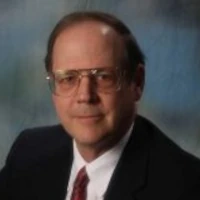
Peter Davenport is best known as the director of the National UFO Reporting Center (NUFORC), a major public clearinghouse for UFO sighting reports in the United States. His influence comes less from a single theory and more from the sustained, operational work of collecting, sorting, and publishing reports.
Background
Davenport’s public biography emphasizes formal education and language/science training, and he has presented himself as an organizer focused on witness reporting rather than sensational storytelling. His public-facing role became “the person behind the inbox” for many civilian sightings.
Ufology career
NUFORC functions as a high-volume intake system: witnesses submit reports, metadata is captured, and narratives are posted for public review. Davenport’s impact is the long-term continuity of that system—keeping the pipeline open and the archive accessible.
Early work (Year–Year)
Before becoming synonymous with NUFORC, Davenport circulated within the UFO community ecosystem of local investigation groups, hotlines, and radio programming, where the “witness call-in” model was common.
Prominence (Year–Year)
1990s–present: As NUFORC director, he became a frequent media guest whenever flaps or headline sightings occurred. This made him a recognizable “institutional” voice associated with ongoing civilian reporting.
Later work (Year–Year)
Davenport’s later work continues the same mission: encouraging reports, improving categorization, and keeping NUFORC visible in both the UFO community and broader public media.
Major contributions
The durable contribution is infrastructure: a public reporting mechanism plus a searchable archive that preserves raw witness testimony at scale. This provides material for researchers, skeptics, journalists, and hobbyists—while also carrying the limitations of self-reported data.
Notable cases
NUFORC is often referenced in relation to major sighting waves, including widely discussed mass events (e.g., regional “flaps”). Davenport has also highlighted “high-strangeness” reports on radio to illustrate recurring patterns and oddities.
Views and hypotheses
Davenport generally emphasizes documentation, witness clarity, and pattern recognition across reports. He has supported the idea that some reports represent real, unexplained aerial phenomena, while acknowledging noise from misidentifications and hoaxes.
Criticism and controversies (if notable)
A common critique of hotline-style databases is uneven verification: reports vary in quality, and public posting can amplify weak cases. Supporters counter that open archives preserve primary testimony and allow independent review.
Media and influence
Davenport has appeared on major talk-radio platforms discussing recent cases and broader trends, and he is a recurring speaker at UFO conferences. His media role often parallels his NUFORC role: summarizing what witnesses are reporting “right now.”
Selected works
NUFORC public case archive; recurring radio appearances; conference presentations on reporting trends and notable recent cases.
Legacy
Davenport’s legacy is operational continuity: NUFORC remained a recognizable, functioning reporting institution across decades, shaping how the public submits and reads civilian UFO testimony.