Introduction
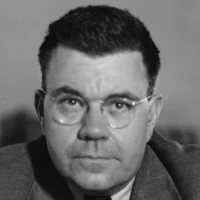
Edward U. Condon is a physicist strongly associated with the University of Colorado’s Air Force–commissioned UFO study, commonly called the “Condon Committee,” and its influential final report. In ufology history, this is one of the biggest institutional inflection points: a report that many cite as legitimizing official disengagement.
Background
Condon’s standing comes from mainstream physics and institutional science. That status is a key reason the report carried weight well beyond the UFO community.
Ufology career
He was not a lifelong ufologist; his relevance is concentrated in the Colorado study and how it influenced policy, funding, and academic willingness to engage with UFO claims.
Early work (Year–Year)
The key “early” UFO-relevant period is the study’s formation and investigation phase, when case files were reviewed under a scientific-audit framing.
Prominence (Year–Year)
Prominence peaked around the release and long shadow of the final report, which became a shorthand citation in official and academic contexts.
Later work (Year–Year)
Later discourse focuses on reassessing the report’s methodology and conclusions, often in light of later UFO waves and renewed government interest.
Major contributions
Condon’s major contribution is institutional: he helped define a mainstream posture that UFO research was unlikely to produce major scientific returns—an argument that shaped decades of gatekeeping.
Notable cases
The report evaluated multiple cases; in ufology memory the “case list” matters less than the report’s conclusion and the rhetorical authority it provided.
Views and hypotheses
The report is typically summarized as concluding limited scientific value in continued UFO study, though interpretations vary across camps.
Criticism and controversies (if notable)
Critics argue the study was predisposed toward closure and that “unexplained” cases were not given proper weight; defenders argue it was a reasonable scientific triage.
Media and influence
The “Condon” name became a recurring symbol in debates: skeptics cite it as closure; proponents cite it as an example of institutional suppression or bias.
Selected works
Scientific Study of Unidentified Flying Objects (final report edition).
Legacy
Condon’s legacy in ufology is enormous: a single institutional episode that shaped the reputational environment of UFO research for generations.